
Stede Bonnet
English landowner turned pirate, known as the Gentleman Pirate.

via Wikipedia: Stede Bonnet · see source
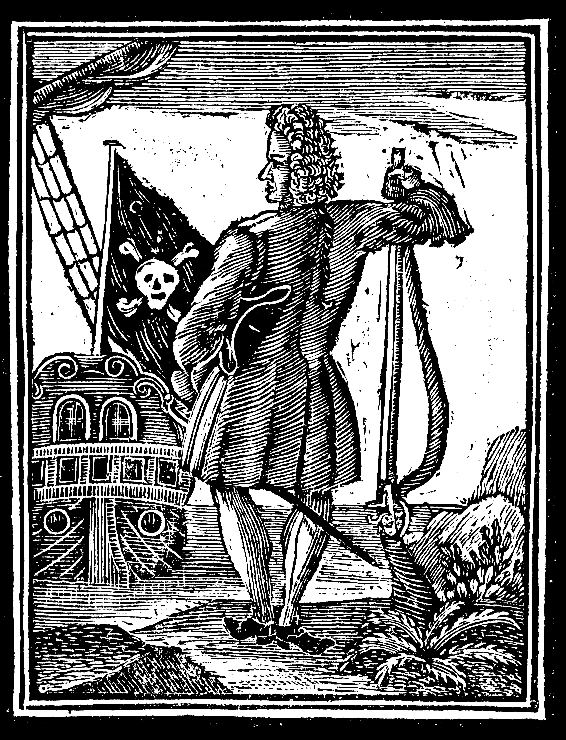
Stede Bonnet (c. 1688 – 10 December 1718), known as the Gentleman Pirate, was an English pirate and landowner. Born into a wealthy English family on the island of Barbados, he inherited the family estate after his father's death in 1694. Despite his lack of sailing experience, Bonnet decided he should turn to piracy and crime in the spring of 1717. He bought a sailing vessel, the Revenge, and travelled with his paid crew along the Eastern Seaboard of what is now the Eastern United States, capturing other vessels and burning other Barbadian ships. He is notable for his unusual background as a gentleman pirate and his collaboration with the infamous pirate Blackbeard.
- born
- c. 1688, Barbados
- died
- 10 December 1718, Charles Town, South Carolina
- field
- Piracy
- nationality
- English
- known_for
- Gentleman Pirate; partnership with Blackbeard; lack of sailing experience
Lore & Background
Stede Bonnet was born in 1688 and christened at Christ Church parish on 29 July 1688. His parents, Edward and Sarah Bonnet, owned an estate of over 400 acres southeast of Bridgetown, Barbados, which was bequeathed to Bonnet upon his father's death in 1694. Bonnet married Mary Allamby in Bridgetown on 21 November 1709. They had three sons – Allamby (who died by 1715), Edward, and Stede Jr – and a daughter, Mary. The three surviving children were all younger than five when their father abandoned them for piracy. Historian Robert C. Ritchie suggests Bonnet was driven to piracy to escape his bad marriage or to 'recapture his more adventurous youth.' Bonnet held the rank of major in the Barbados militia, but there is no record that he took part in the fighting during the War of the Spanish Succession. During the spring of 1717, Bonnet decided to become a pirate despite having no knowledge of shipboard life. He contracted a local shipyard to build him a sloop, equipped with ten guns, and named it the Revenge. He enlisted a crew of more than seventy men and paid them wages, not shares of plunder. Bonnet's initial cruise took him to the coast of Virginia, where he captured and plundered four vessels and burned the Barbadian ship Turbes. He sailed north to New York City, taking two more ships, and by August had returned to the Carolinas, attacking two more ships. In September, Bonnet set course for Nassau. En route, he encountered a Spanish man-of-war; the Revenge was badly damaged, Bonnet was seriously wounded, and half the crew was killed or wounded. While at Nassau, Bonnet met Blackbeard. They decided to cruise together, with Blackbeard taking command while Bonnet recovered from his wounds. They plundered eleven ships in Delaware Bay. On 29 September, the Revenge, captained by Blackbeard, plundered the sloop Betty. Captain Codd described Bonnet as walking the deck in his nightshirt, lacking any command. On 17 November, Blackbeard captured the French slave ship La Concorde, renaming her Queen Anne's Revenge. Bonnet took back command of Revenge. After 19 December, Bonnet and Blackbeard separated. On 28 March 1718, Bonnet encountered the Protestant Caesar off Honduras; the ship escaped, and his frustrated crew deserted him to join Blackbeard. Blackbeard imprisoned Bonnet on his own ship. Bonnet confided he was ready to give up his criminal life. Under Blackbeard's henchman Richards, the Revenge captured a Jamaican sloop, the Adventure. Bonnet accompanied Blackbeard to South Carolina, where Blackbeard blockaded Charles Town. In June, the Queen Anne's Revenge ran aground at Topsail Island. Blackbeard allowed Bonnet to take command of the Revenge again. Both men accepted pardons from Governor Charles Eden under King George's Act of Grace. Bonnet stayed in Bath to get a clearance to sail to St. Thomas for a letter of marque. Bonnet returned to Topsail Island to find Blackbeard had sunk several ships, taken the loot, and robbed the Revenge. Bonnet rescued seventeen pirates marooned by Blackbeard. Wanting revenge, Bonnet set sail for Ocracoke Inlet but missed Blackbeard by several hours. Hoping to preserve his pardon while returning to piracy, Bonnet adopted the alias 'Captain Thomas' and changed his ship's name to Royal James. He had returned to piracy by July 1718. In August, Bonnet anchored Royal James on an estuary of the Cape Fear River to careen and repair the ship. In late August and September, Colonel William Rhett, authorized by South Carolina's governor Robert Johnson, led a naval expedition. Rhett's and Bonnet's men engaged in combat for hours, but the outnumbered pirates surrendered. Rhett arrested the pirates and brought them to Charles Town in early October. Bonnet escaped on 24 October but was recaptured on Sullivan's Island. On 10 November, Bonnet was tried and charged with two acts of piracy. Judge Nicholas Trott sentenced him to death. Bonnet wrote to Johnson for clemency, but Johnson endorsed the decision, and Bonnet was hanged in Charles Town on 10 December 1718.
Reader's Guide
Stede Bonnet's significance lies in his atypical profile as a wealthy landowner who turned to piracy without maritime experience, earning him the moniker 'Gentleman Pirate.' His partnership with Blackbeard highlights the fluid alliances among early 18th-century pirates. Bonnet's career illustrates the tensions between traditional pirate practices—such as sharing plunder—and his own wage-based system, which undermined his authority. His eventual capture and execution in Charles Town underscore the efforts of colonial authorities to suppress piracy in the Atlantic. Bonnet's story has been romanticized in popular culture, but his historical legacy remains that of an amateur pirate whose brief career ended in failure and death.
Did You Know?
- Bonnet paid his crew wages, not shares of plunder, which was a break from pirate tradition.
- He was seriously wounded and half his crew was killed or wounded in an encounter with a Spanish man-of-war en route to Nassau.
- Bonnet adopted the alias 'Captain Thomas' and changed his ship's name to Royal James to resume piracy while trying to preserve his pardon.
- He escaped from custody on 24 October 1718 but was recaptured on Sullivan's Island.
- Bonnet wrote to Governor Robert Johnson for clemency after being sentenced to death, but Johnson endorsed the judge's decision.
The Gentleman Who Chose the Sea
Stede Bonnet entered the world in 1688 on Barbados, christened at Christ Church parish, into one of the island's wealthiest families. His parents, Edward and Sarah, held an estate exceeding four hundred acres southeast of Bridgetown, and young Stede received a solid education that placed him among the highest ranks of colonial society. After his father died in 1694, the estate passed to him. His maternal grandfather, John Whetstone — deputy secretary of Barbados and a distant relation of Oliver Cromwell — raised him after both parents passed. Bonnet married Mary Allamby in 1709, and together they had four children. By the spring of 1717, despite holding the rank of major in the Barbados militia and possessing zero experience of shipboard life, he made the extraordinary decision to become a pirate. Historian Robert C. Ritchie has speculated the move was an escape from a troubled marriage or a longing to recapture his adventurous youth. Whatever the motive, a man who had never set foot on a merchant vessel chose to commission his own and sail into the Caribbean.
The Revenge and the Eastern Seaboard
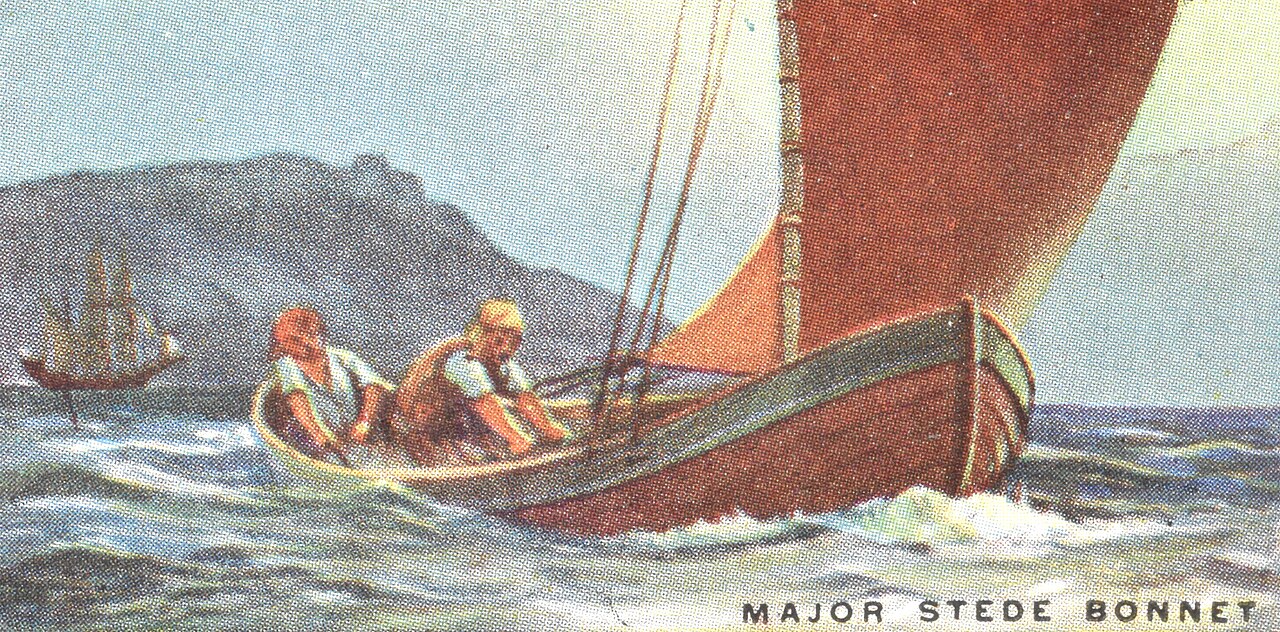
Rather than seizing a vessel through mutiny or boarding — the standard pirate method — Bonnet contracted a local shipyard to build him a sloop, armed it with ten guns, and named her the Revenge. He enlisted over seventy men and, in another departure from pirate custom, paid them wages instead of offering shares of plunder. He relied heavily on his quartermaster for actual sailing knowledge, which earned him little respect aboard. After a brief period at anchor in Carlisle Bay, he departed under cover of darkness. His first cruise took him to the Virginia coast near the Chesapeake, where he captured four vessels and burned the Barbadian ship Turbes to prevent word of his crimes reaching home. He pushed north to New York, taking two more ships, then returned to the Carolinas by August, where he attacked a Boston brigantine and a Barbadian sloop. The latter was stripped of its tackle for careening the Revenge, then dismantled for timber and burned. In September, heading for Nassau, he clashed with a Spanish man-of-war; the Revenge was badly damaged, Bonnet was seriously wounded, and half his crew was killed or injured.
An Unlikely Alliance with Blackbeard
Arriving at Nassau — the notorious pirate haven on New Providence — Bonnet met Captain Benjamin Hornigold and, for the first time, the legendary Blackbeard. What began as a tense encounter between rivals quickly evolved into a close, if improbable, partnership. Blackbeard assumed command of the Revenge while Bonnet kept to his cabin, nursing the wounds sustained against the Spanish warship. Together they sailed north to Delaware Bay, where they plundered eleven ships, including the sloop Betty with her cargo of Madeira wine. The alliance, however, proved fragile. When Bonnet failed to capture the merchant vessel Protestant Caesar, his crew abandoned him entirely, deserting to join Blackbeard aboard the Queen Anne's Revenge. Bonnet lingered on Blackbeard's ship as a guest rather than a commander. It was not until the summer of 1718, after receiving a pardon from North Carolina governor Charles Eden and clearance to privateer against Spanish shipping, that he once again held a ship under his own name.
The Cape Fear Stand and the Gallows
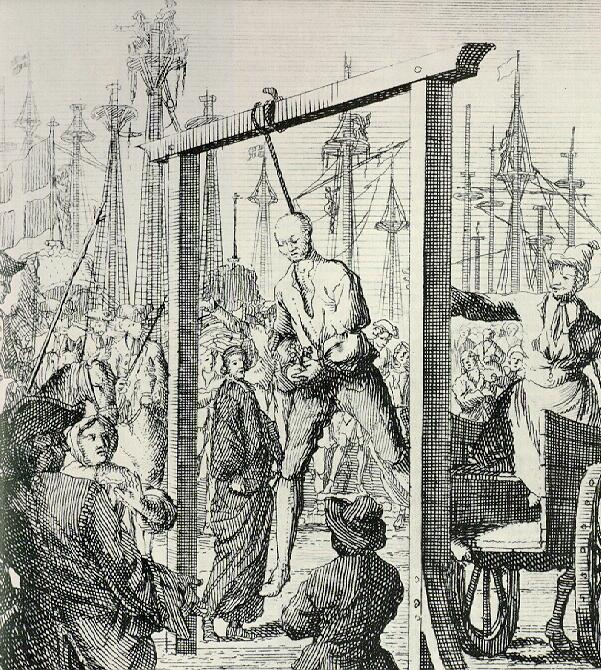
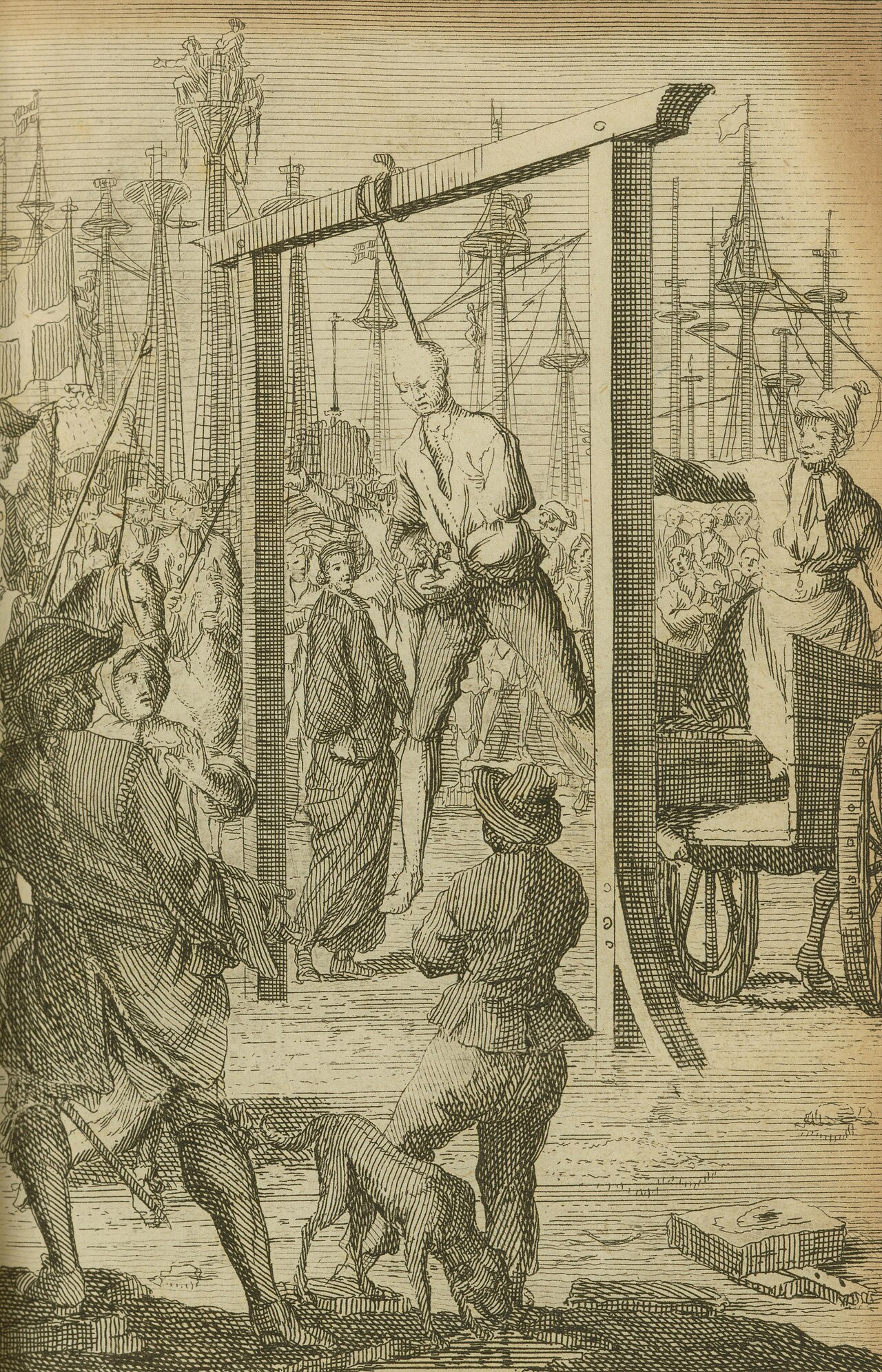
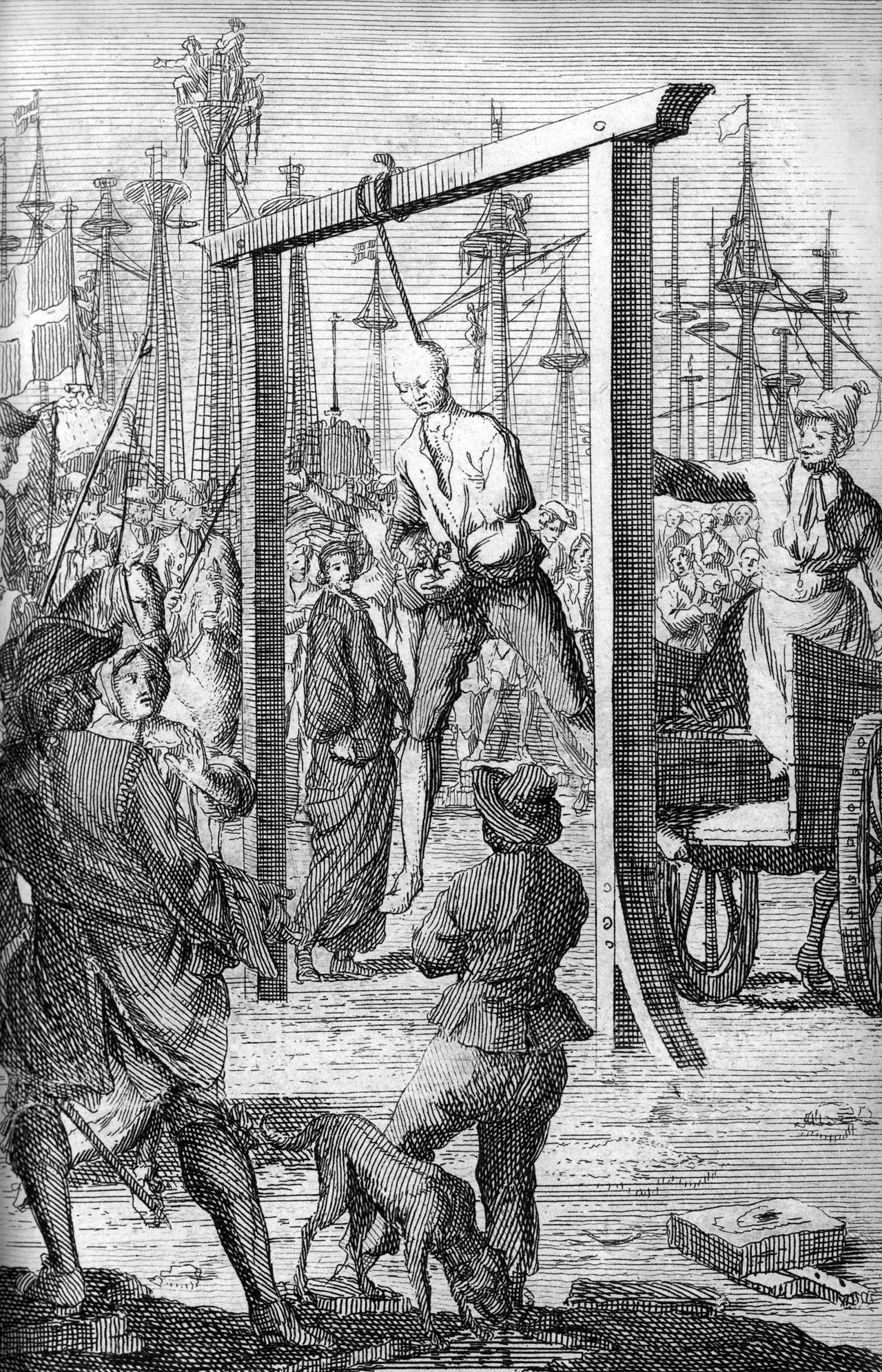
Tempted back to piracy but unwilling to forfeit his pardon, Bonnet adopted the alias Captain Thomas and renamed his vessel the Royal James. By July 1718 he was openly raiding again. In August, he anchored the Royal James in an estuary of the Cape Fear River to careen and repair. Colonel William Rhett, authorized by South Carolina governor Robert Johnson, launched a naval expedition against the pirates. The two forces engaged in hours of combat, but the outnumbered pirates were ultimately forced to surrender. Rhett hauled the captives to Charles Town in early October. Bonnet escaped on 24 October but was quickly recaptured on Sullivan's Island. On 10 November he stood trial, charged with two acts of piracy. Judge Nicholas Trott sentenced him to death. Bonnet wrote to Governor Johnson pleading for clemency, but Johnson upheld the sentence. On 10 December 1718, the Gentleman Pirate was hanged in Charles Town, ending the life of a man who had once been among the wealthiest in Bridgetown.
Common Misconceptions (Editorial)
One common misconception is that Stede Bonnet was a successful or feared pirate. However, the facts show he was wounded in his first major encounter, frequently lost command of his own ship, and was ultimately captured and hanged. Another misconception is that Bonnet was a typical pirate who shared plunder equally with his crew; in fact, he paid his men wages rather than shares of loot, a practice more like a private employer than a pirate captain.
Why It Matters (Editorial)
Stede Bonnet endures in popular imagination not for his skill or success, but for his sheer improbability as a pirate—a wealthy landowner who abandoned his family to turn to a life of crime despite having no nautical experience. His story challenges the romanticized image of piracy by revealing how ineptitude, desperation, and a disastrous partnership with Blackbeard could still produce a notorious figure, reminding us that history’s most memorable villains are often shaped more by circumstance than by competence.
Gallery
Frequently Asked Questions
Who is Stede Bonnet?
Stede Bonnet was a wealthy English landowner from Barbados who abruptly took up piracy in 1717 with no prior seafaring experience. He is best known as the 'Gentleman Pirate,' a title that highlights how out of place his aristocratic background was in the rough world of maritime raiding.
Why is Stede Bonnet called the 'Gentleman Pirate'?
The nickname comes from the fact that Bonnet belonged to a wealthy Barbadian family and had every reason to stay comfortably on land. Rather than being a desperate sailor or common outcast, he was a landed gentleman who simply bought a sloop and decided to raid ships for fun.
How did Stede Bonnet get into piracy?
In 1717, with absolutely no sailing experience, Bonnet purchased a sloop he named the Revenge and began attacking vessels along the Eastern Seaboard. His plunge into piracy was a sudden, almost impulsive decision rather than a gradual drift into a seafaring life.
What is Stede Bonnet's connection to Blackbeard?
Bonnet and Edward 'Blackbeard' Teach formed a working partnership during Bonnet's brief pirate career, operating together in the Caribbean and along the American coast. This alliance gave Bonnet access to Blackbeard's seasoned crew and dramatically expanded his operational reach.
How does Stede Bonnet's story end?
Bonnet was captured in 1718, tried in Charles Town, South Carolina, and sentenced to hang. He was executed on 10 December 1718, bringing his roughly one-year piratical career to a swift and final close.
More in Pirates 1-21
Spotted an error? Know more?
This is a living reference — every entry is fact-audited, and reader corrections feed straight into our audit queue. Suggest an edit · See this site's audit record