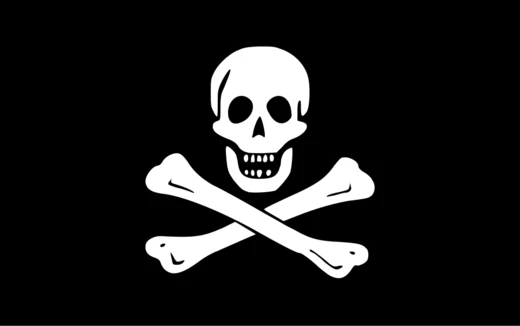
Samuel Bellamy
English pirate who captured 53 ships in a single year.

via Wikipedia: Samuel Bellamy · see source
Samuel Bellamy (c. 23 February 1689 – 26 April 1717), erroneously known as 'Black Sam' Bellamy, was an English sailor turned pirate during the early 18th century. He is best known as one of the wealthiest pirates in the Golden Age of Piracy, though his known career as a pirate captain lasted little more than a year. He and his crew captured at least 53 ships.
- born
- c. 23 February 1689 (baptized 18 March 1689), possibly Hittisleigh, Devon, Engla
- died
- 26 April 1717, off Cape Cod, Massachusetts
- nationality
- English
- known_for
- One of the wealthiest pirates of the Golden Age; captain of the Whydah Gally
Lore & Background
Bellamy may have been born in 1689 in the parish of Hittisleigh on Dartmoor in Devon, the youngest of six known children of Stephen and Elizabeth Bellamy. Alternately, a captured sailor testified in 1716 that Bellamy 'declared himself to be an Englishman born in London.' Elizabeth died soon after, and was buried on 23 February 1689, three weeks before Samuel's baptism on 18 March. He became a sailor at a young age, joining the Royal Navy in his late teens and fighting in several battles. Though speculation exists of a wife and child, there is no definite historical proof. Around 1715, Bellamy traveled to Cape Cod, allegedly to seek relatives. Local lore holds that he had an affair with Goody Hallett, the 'Witch of Wellfleet.' Professor Elizabeth Reynard gave her the name 'Maria' in 1934, though no evidence supports that name. Her age and marital status are debated. Some stories depict her as a young woman, others as old; circumstantial evidence suggests she may have already been married. Bellamy left Cape Cod in early 1716 with a group to seek the 1715 Spanish Treasure Fleet wrecked off Florida. Wealthy jeweler Palgraves Williams joined and funded the expedition. After Bellamy left, Hallett was found pregnant; legends say she gave birth to a son who choked to death on straw in a barn. She was arrested for murder, imprisoned briefly, then exiled. Bellamy and his group soon turned to piracy under Captain Benjamin Hornigold, with first mate Edward Teach (later 'Blackbeard'). In summer 1716, the crew deposed Hornigold for refusing to attack English ships. The remaining 90 men elected Bellamy captain. He captured the Sultana, made it a galley, and assigned Williams command of the Marianne. Bellamy's greatest capture came in spring 1717: the Whydah Gally, a state-of-the-art 300-ton slave ship with 18 guns, on its maiden voyage. After a three-day chase and a single shot, Captain Lawrence Prince surrendered. Bellamy traded the Sultana for the Whydah, upgraded it to 28 guns, and turned north. The Whydah sank in a nor'easter off Cape Cod on 26 April 1717, killing Bellamy and all but two of the 146-man crew. The wreck was discovered in 1984, the first fully authenticated Golden Age pirate ship found in North America.
Reader's Guide
Samuel Bellamy's significance lies in his brief but extraordinarily successful career as a pirate captain, capturing at least 53 ships in little over a year. He is remembered as one of the wealthiest pirates of the Golden Age, though his wealth was short-lived. His flagship, the Whydah Gally, represents a key archaeological discovery: its remains, found in 1984, were the first fully authenticated pirate ship from the Golden Age discovered in North America, providing tangible evidence of pirate life. Bellamy's story is also intertwined with local Cape Cod legend, particularly the tale of his lover Goody Hallett, which has become a part of regional folklore. The speech attributed to him by Captain Charles Johnson—arguing that pirates rob the rich under their own courage while rich men rob the poor under cover of law—has become a famous expression of pirate philosophy, though its attribution to Bellamy specifically is disputed. His legacy endures as a symbol of the romanticized yet brutal reality of early 18th-century piracy.
Did You Know?
- Bellamy's known career as a pirate captain lasted little more than a year, yet he and his crew captured at least 53 ships.
- The Whydah Gally was a state-of-the-art 300-ton English slave ship with 18 guns, capable of speeds up to 13 knots.
- After a three-day chase, Bellamy captured the Whydah with a single shot; Captain Lawrence Prince surrendered by lowering its flag.
- The Whydah sank in a nor'easter off Cape Cod on 26 April 1717, killing Bellamy and all but two of the 146-man crew.
- The remains of the Whydah Gally were discovered in 1984, making it the first fully authenticated Golden Age pirate ship discovered in North America.
Origins and a Sailor's Beginnings
Samuel Bellamy entered the world in 1689, most likely in the parish of Hittisleigh on Dartmoor in Devon, England, though a captive sailor later testified that Bellamy identified himself as a London native. He was the youngest of six children born to Stephen and Elizabeth Bellamy, and his mother's death came just weeks before his baptism in March of that year. As a teenager, Bellamy enlisted in the British Royal Navy, where he saw action in multiple engagements before his service ended. By 1715, he had made his way to Cape Cod, reportedly to visit relatives in the area. Local tradition holds that during this stay he became involved with a woman known as Goody Hallett, a figure whose identity, age, and marital status remain fiercely debated among historians and storytellers alike. After departing the Cape in early 1716, Bellamy joined a group of men seeking the scattered riches of the 1715 Spanish Treasure Fleet that had been wrecked off Florida's coast the previous summer in a hurricane.
From Crewman to Captain
Bellamy's path to piracy began aboard the Marianne, a vessel commanded by Benjamin Hornigold with Edward Teach serving as first mate. The crew's patience with Hornigold wore thin during the summer of 1716, particularly over his refusal to target English-flagged ships. In a decisive majority vote, the men deposed Hornigold and sent him away with his loyalists, including Teach. The remaining ninety sailors then chose Bellamy to lead them. After seizing a second vessel, the Sultana, the crew approved its conversion into a galley, and Bellamy claimed it as his own flagship while assigning his companion Palsgrave Williams to command the Marianne. For a brief period, Bellamy sailed alongside Olivier Levasseur before the latter departed for South American waters in early 1717. In little more than a year at sea, Bellamy and his crew took at least fifty-three ships, a rate of plunder that placed him among the wealthiest pirates of the Golden Age.
The Whydah Gally
In the spring of 1717, Bellamy's pursuit of the Whydah Gally became the defining act of his short career. The vessel, a 300-ton, 102-foot English slave ship built in 1715 and armed with eighteen guns, was on its maiden voyage and had just completed the Africa-to-Caribbean leg of the triangular trade, carrying the proceeds of 312 enslaved people in the form of gold, indigo, Jesuit's bark, and ivory. Bellamy shadowed the Whydah for three days before closing within firing range. A single shot proved sufficient: Captain Lawrence Prince lowered his flag and surrendered without a fight. True to his reputation for generosity, Bellamy spared Prince's crew and even traded the Sultana to the Whydah's officers. He then stripped the captain's quarters, upgraded the armament to twenty-eight guns, and set his new flagship northward along the Carolinas toward New England.
The Storm and the Aftermath
Two months after the Whydah's capture, the vessel was caught in a violent nor'easter off the Massachusetts coast on April 26, 1717. The storm sank the ship and claimed Bellamy's life along with most of his crew, ending a piracy career that had lasted barely over a year yet yielded at least fifty-three captured vessels. For centuries, the Whydah remained a ghost of legend, her fate known only through written accounts. That changed in 1984 when divers located the wreck, making it the first fully authenticated Golden Age pirate ship to be identified in North America. The discovery confirmed many details from historical records and cemented Bellamy's place in maritime history. Despite his notoriety, Bellamy was often remembered for his fairness and generosity toward those he captured, a reputation that set him apart from many of his contemporaries in the rough world of early eighteenth-century piracy.
Common Misconceptions (Editorial)
One common misconception is that Bellamy was widely known as "Black Sam" during his lifetime, but the facts indicate this name was erroneously applied later. Another is that his pirate career spanned many years, when in fact his known career as a pirate captain lasted little more than a year, yet he still captured at least 53 ships. Additionally, some stories claim Goody Hallett (often called "Maria") was a young, unmarried woman, but the facts note that her age and marital status are debated, and circumstantial evidence suggests she may have already been married.
Why It Matters (Editorial)
Samuel Bellamy endures as a figure of fascination because his brief, spectacular career encapsulates the brutal romance and fleeting fortunes of the Golden Age of Piracy. The discovery of the Whydah Gally in 1984 provides tangible, authenticated links to that era, reminding us that behind the legends were real people whose stories are as much about tragedy and consequence as about adventure and rebellion.
Frequently Asked Questions
Who is Samuel Bellamy?
Samuel Bellamy was an English sailor who turned to piracy in the early 1700s and became captain of the Whydah Gally. He is widely regarded as one of the most successful and wealthy pirates of the Golden Age, though the popular nickname "Black Sam" is a later misattribution with no firm historical backing.
What was Samuel Bellamy's role in the pirate world?
He captained the Whydah Gally and led his crew in seizing at least 53 merchant vessels during a career that stretched barely past a single year. His operation made him one of the most prolific pirate captains of his era.
How does Samuel Bellamy's story end?
Bellamy died on 26 April 1717 when the Whydah Gally was wrecked in a violent storm off the coast of Cape Cod, Massachusetts. Unlike many of his contemporaries, he was never captured or executed; the sea took him instead.
Why is Samuel Bellamy considered important in pirate history?
Taking 53 ships in roughly one year makes him one of the most prolific and wealthy pirates ever documented. The 1985 discovery of the Whydah wreck further cemented his place as a central figure in both historical and popular pirate lore.
Where and when was Samuel Bellamy born?
He was born around 23 February 1689 (baptized 18 March 1689), most likely in Hittisleigh, Devon, or possibly in London, England. His exact birthplace remains uncertain, but both locations are cited in surviving records.
More in Pirates 1-21
Spotted an error? Know more?
This is a living reference — every entry is fact-audited, and reader corrections feed straight into our audit queue. Suggest an edit · See this site's audit record