Mary Read
English pirate who sailed with John Rackham and Anne Bonny.

via Wikipedia: Mary Read · see source
Mary Read (died April 1721) was an English pirate who served under John Rackham during the Golden Age of Piracy. Alongside Anne Bonny, she is one of the few known female pirates of that era. Much of her background is unknown, and the first biography—from Captain Charles Johnson's 1724 book, *A General History of the Pyrates*—is considered greatly unreliable. What is certain: on 22 August 1720, Read joined Rackham's crew, stole the sloop *William* from Nassau, and spent months attacking merchant ships in the West Indies until her capture on 22 October 1720. She and Bonny both claimed pregnancy to avoid execution, but Read died in prison in Spanish Town around late April 1721.
- died
- April 1721 (Spanish Town, Jamaica)
- field
- Piracy
- nationality
- English
- known_for
- Female pirate serving under John Rackham; pleaded pregnancy to avoid execution
Lore & Background
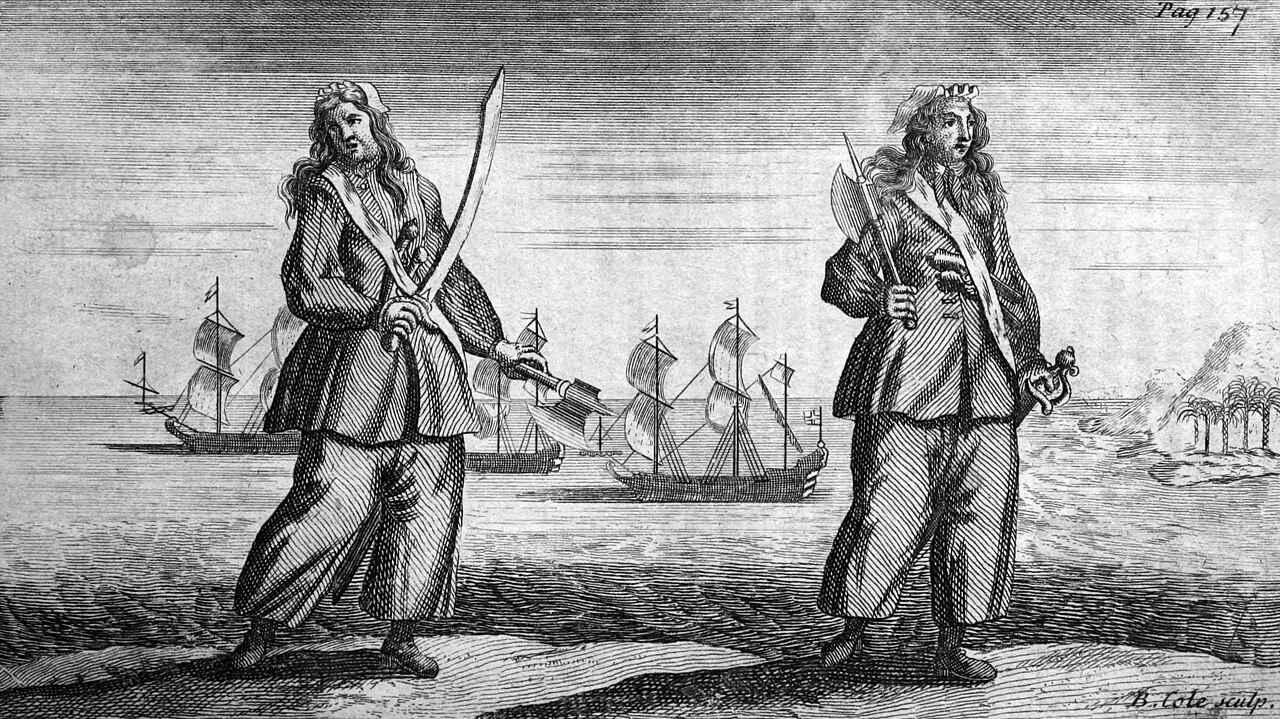
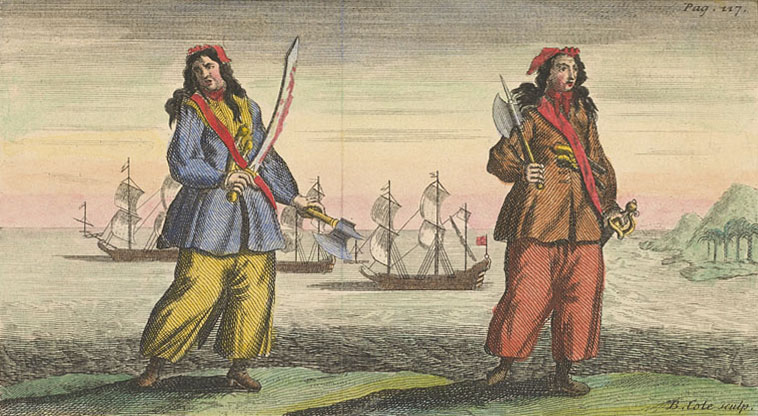
Mary Read's early life is almost entirely unknown. No primary source, including her trial transcript, mentions her age or nation of origin. Johnson's 1724 biography claims she was born in London, dressed as a boy in childhood, joined the military, and later moved to the West Indies—but there is little evidence to support it. Possible candidates include a Mary Read born in Bristol around May 1681 (whose father became a Madagascar pirate) or a Mary Read who signed the Breholt Petition in 1708; neither can be confirmed as the pirate. Read traveled to the Bahamas at an unknown date, likely before 1720, and became acquainted with John Rackham. On 22 August 1720, she, Rackham, Anne Bonny, and about a dozen others stole the sloop *William* from merchant John Ham in Nassau harbor. Governor Woodes Rogers issued a proclamation on 5 September 1720 naming Read and Bonny for arrest. The crew attacked merchant ships until captured by former privateer Jonathan Barnet on 22 October 1720 near Negril Point, Jamaica. A victim, Dorothy Thomas, testified that Read and Bonny "wore men's jackets, and long trousers, and handkerchiefs tied about their heads" and carried machetes and pistols, cursing and swearing. Rackham and the male crew were hanged; Read and Bonny pleaded the belly and received stays of execution. Read died in prison in Spanish Town in April 1721. The cause is unknown; Johnson claims fever. Her burial on 28 April is recorded in Saint Catherine Parish. No record of a baby's burial exists, suggesting she may have died while pregnant or never been pregnant.
Reader's Guide
Mary Read's significance lies primarily in her gender, as one of the few documented female pirates during the Golden Age of Piracy. Despite a piratical career of only 61 days, she became a lasting figure in popular culture. Within a decade, Read-inspired characters appeared, such as Polly in John Gay's 1729 ballad opera *Polly*. In the 19th century, literature like Charles Ellms' *Pirates Own Book* continued to popularize her story. Much of what is commonly known about Read comes from Captain Charles Johnson's 1724 *A General History of the Pyrates*, a source noted for its unreliability. The lack of primary evidence means her early life remains obscure, and even her trial transcript offers no details on her age or origin. Her legacy endures as a symbol of the rare women who operated in the male-dominated world of piracy.
Did You Know?
- Mary Read's piratical career lasted only 61 days, from 22 August to 22 October 1720.
- Read and Anne Bonny were named in a proclamation by Governor Woodes Rogers on 5 September 1720, demanding their arrest.
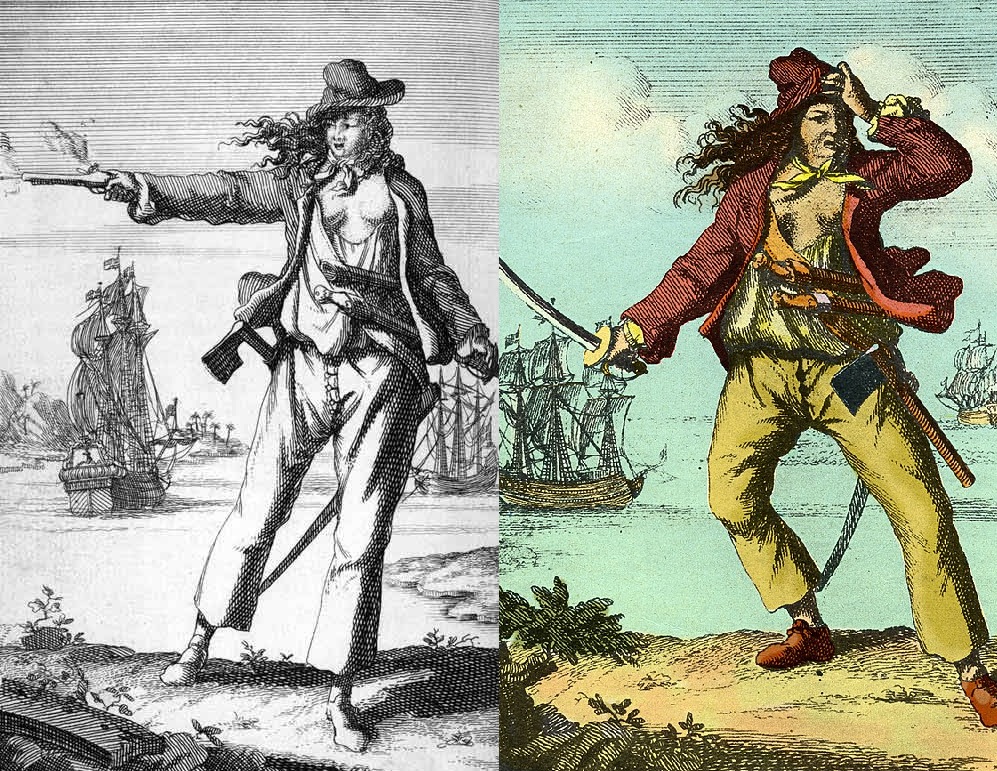
- A victim, Dorothy Thomas, testified that Read wore men's jackets and trousers, carried a machete and pistol, and cursed at men to murder her.
- Read's burial on 28 April 1721 is recorded in Saint Catherine Parish, Jamaica, but no record of a baby's burial exists.
- The first biography of Read, from Captain Charles Johnson's 1724 book, is considered greatly unreliable and lacks supporting evidence.
The Elusive Identity of Mary Read
Perhaps the most striking aspect of Mary Read's story is how little can be confirmed about the woman herself. No primary document—neither her trial transcript nor any other surviving record—states her age or place of origin. Unlike Anne Bonny, whose background has at least some documentary trail, Read vanishes into a sea of namesakes. Several Mary Reads were born across England in the late seventeenth century, making identification nearly impossible. Two candidates have been proposed. One is a Bristol-born Mary Read, likely entering the world around May 1681, whose father John reportedly became a pirate in Madagascar and later died of unknown causes; her mother Ann Canterell wrote to a man named Adam Baldridge in 1698 seeking her husband's wealth but received no answer. The other is a Mary Read who left a mark on the Breholt Petition of 1708, a plea sent to Queen Anne on behalf of forty-eight individuals connected to pirates still stranded in Madagascar. That petition, collected by the writer Penelope Aubin, ultimately failed to secure a pardon. Whether the pirate was one of these women, both, or neither remains one of the enduring puzzles of early-eighteenth-century maritime history.
The Johnson Narrative and Its Problems
Every dramatic detail of Mary Read's supposed childhood and military career traces back to a single source: Captain Charles Johnson's A General History of the Pyrates, published in 1724. Johnson painted a sweeping portrait—a mother in London who, after her sailor husband vanished at sea and her first child died in infancy, dressed her baby daughter in boys' clothing to extract a weekly crown from a wealthy mother-in-law. The girl, now thirteen, became a foot-boy for a French lady, then enlisted on an English warship, then served as a cadet in Flanders, then fought in a cavalry regiment allied with Dutch forces against the French. She fell in love with a Flemish soldier, married him, used their combined commissions to open an inn called The Three Horseshoes near Breda Castle, and after his death and the Peace of Ryswick, boarded a ship for the West Indies where pirates captured her. Yet this entire saga is widely regarded as unreliable. No inn by that name appears in records near Breda, the military conflict is vaguely implied rather than specified, and no independent evidence corroborates any of the episodes. The narrative has nonetheless become the default story for centuries, simply because nothing else exists.
The Sloop William and the West Indies Campaign
Mary Read's confirmed pirate career, while brief, was intense. She arrived on New Providence in the Bahamas at some point before 1720 and became acquainted with John Rackham, though the precise nature of their relationship is never clarified in the trial record. On 22 August 1720, Read, Rackham, Anne Bonny, and roughly a dozen other crew members seized the sloop William from the merchant John Ham while it sat at anchor in Nassau harbor. The crew then spent the following months raiding merchant shipping throughout the West Indies. Their notoriety was swift: by 5 September, Governor Woodes Rogers issued a proclamation demanding the arrest of Rackham and his associates, a notice published in The Boston Gazette that named both Read and Bonny explicitly. The campaign ended on 22 October 1720, when the former privateer Jonathan Barnet engaged the crew in a brief naval action near Jamaica and took them all into custody. From the moment they slipped out of Nassau to the moment they were hauled before the courts, the entire episode lasted barely two months.
Trial, Reprieve, and a Death in Spanish Town
The aftermath of the October 1720 capture was swift and brutal for most of Rackham's crew. John Rackham and every male member of the company were tried, sentenced, and executed. Mary Read and Anne Bonny, however, invoked pregnancy during their own proceedings, and the court granted them a stay of execution—a reprieve that would ultimately be their only mercy. What followed for Read was a quiet, unglamorous end. She died while imprisoned in Spanish Town, Jamaica, around late April 1721, of an unknown cause generally thought to have been a fever. Anne Bonny's fate after the reprieve is entirely undocumented; she simply disappears from the historical record. Read's death in a colonial jail cell, far from the dramatic naval engagements of her brief pirate career, underscores how little of her story was shaped by her own hand. She left no writings, no surviving family in the record, and no legacy beyond the pages of a book whose author was not even present at her trial. In the end, Mary Read is defined less by what she did than by the silence that surrounded her.
Common Misconceptions (Editorial)
1. A common misconception is that Mary Read had a long and well-documented career as a pirate. In reality, her piratical career lasted only 61 days, from 22 August to 22 October 1720.
2. Many believe the dramatic details of Read's early life—such as being raised as a boy in London or serving in the military—are historically accurate. However, these claims come from Captain Charles Johnson's 1724 biography, which is considered greatly unreliable and lacks supporting evidence. No primary source confirms her age or nation of origin.
3. It is often assumed that Read's pregnancy plea saved her life. In fact, she died in prison in April 1721, and no record of a baby's burial exists, suggesting she may have died while pregnant or never been pregnant at all.
Why It Matters (Editorial)
Mary Read endures as a figure of fascination because she defied the overwhelmingly male world of Golden Age piracy, proving that women could be as bold and ruthless as their male counterparts. Her brief but dramatic career, documented only through unreliable legends and scant records, also highlights the challenge of separating fact from myth in history—reminding us that even celebrated figures can be largely unknown.
Gallery
Frequently Asked Questions
Who is Mary Read?
Mary Read was an English woman who became one of the rare documented female pirates of the early 18th century. She is best known for sailing aboard John Rackham's ship during the Golden Age of Piracy, alongside Anne Bonny.
What was Mary Read's role on Rackham's crew?
She served as a fighting member of John Rackham's crew rather than in a domestic or support capacity. Like Anne Bonny, she was recorded as a woman who actively participated in the ship's pirate operations.
How did Mary Read die?
Mary Read was executed by hanging in Spanish Town, Jamaica, in April 1721. She had pleaded pregnancy to stay her sentence, but the claim was not accepted in time to save her life.
Why is Mary Read important in pirate history?
She stands out as one of the very few women whose piracy is confirmed in the historical record from the Golden Age. Her story, preserved largely through Captain Charles Johnson's 1724 account, challenges the assumption that piracy was an exclusively male enterprise.
How is Mary Read's story different from Anne Bonny's?
While both women sailed under Rackham, Mary Read was captured and executed in 1721, whereas Anne Bonny escaped death by pleading pregnancy and her fate after that point remains unknown. Read's death gives her narrative a definitive ending, while Bonny's trail simply goes cold.
More in Pirates 1-21
Spotted an error? Know more?
This is a living reference — every entry is fact-audited, and reader corrections feed straight into our audit queue. Suggest an edit · See this site's audit record