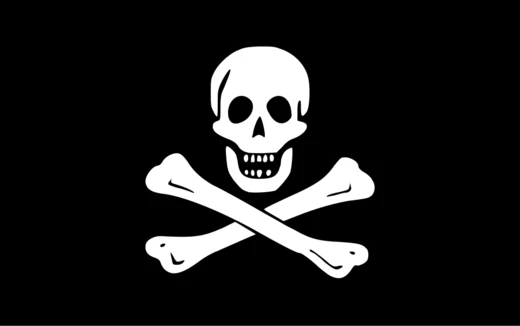
Blackbeard
English pirate who terrorized the West Indies and American colonies.

Edward Teach (or Thatch; c. He remains one of history's most well-known pirates.
- field
- Piracy
- nationality
- English
- known_for
- Commanding the Queen Anne's Revenge; fearsome appearance with lit fuses under his hat; blockading Charles Town, South Carolina
Lore & Background
Teach captured a French slave ship known as La Concorde, renamed her Queen Anne's Revenge, equipped her with 40 guns, and crewed her with over 300 men. His nickname derived from his thick black beard and menacing appearance. He was reported to have tied lit fuses (slow matches) under his hat to frighten his enemies. He formed an alliance of pirates and blockaded the port of Charles Town, South Carolina, ransoming its inhabitants. He then ran Queen Anne's Revenge aground on a sandbar near Beaufort, North Carolina. He parted company with Stede Bonnet and settled in Bath, North Carolina, historically known as Bath Town, where he accepted a royal pardon. However, he was soon back at sea, where he attracted the attention of Alexander Spotswood, the governor of Virginia. Spotswood arranged for a party of soldiers and sailors to capture him.
Reader's Guide
Blackbeard's significance lies in his enduring fame as an archetypal pirate, romanticized after his death and inspiring works of fiction across many genres. Despite his fearsome reputation, he was a shrewd and calculating leader who spurned the use of violence, relying instead on his menacing image to elicit the desired response from those he robbed. The scarcity of reliable historical records about his early life and the variations in his name (Teach, Thatch, and others) underscore the challenges in separating fact from legend. His brief return to piracy after accepting a royal pardon highlights the tension between colonial authorities and the persistent lure of piracy in the early 18th century.
Did You Know?
- Blackbeard's real surname may have been Thatch, Teach, or even Drummond, but the lack of supporting documentation makes his true name uncertain.
- He was reported to have tied lit fuses (slow matches) under his hat to frighten his enemies.
- His flagship, Queen Anne's Revenge, was originally a French slave ship named La Concorde.
- He accepted a royal pardon in Bath, North Carolina, but soon returned to piracy.
The Death of the World's Strongest
Blackbeard's most defining act in the narrative is the killing of Edward Newgate, the man widely regarded as the strongest pirate in the world. The chain of events began when Blackbeard captured Portgas D. Ace, the second division commander of the Whitebeard Pirates. This act provoked Whitebeard to declare open war on the Marines, launching his fleet against their stronghold at Marineford. The conflict that followed became one of the most devastating wars in the series. Despite his immense power—his Tremor-Tremor Fruit could generate shock waves capable of producing earthquakes and tsunamis, and his bounty of over five billion berries made him the second most wanted pirate after Gold Roger—Whitebeard was ultimately mortally wounded. In his final moments, on the verge of declaring the One Piece real, he was struck down by the Blackbeard Pirates. This single act of violence shattered the existing order and thrust Blackbeard into the center of the world's power structure.
The Yonkō and the Architecture of Power
The Four Emperors occupy a unique tier in the world's hierarchy. Operating in the New World, the second half of the Grand Line, each Emperor commands a sprawling empire spanning multiple islands. At the story's outset, the four seats are held by Shanks, Whitebeard, Kaido, and Big Mom, creating a fragile equilibrium alongside the Seven Warlords of the Sea and the Marine military. Under this arrangement, the Emperors are granted extraordinary autonomy—they can act without interference from the World Government, and in return, the Government does not meddle in their territories. However, the mere prospect of two Emperors forming an alliance is enough to terrify the World Government, which otherwise maintains hegemony over most of the world. This tension between the Emperors and the Government constitutes the central geopolitical conflict of the entire narrative. Blackbeard's insertion into this system, replacing the fallen Whitebeard, represents a seismic shift in that carefully maintained balance.
The Unprecedented Theft of a Devil Fruit
One of the most extraordinary and unsettling moments in the entire series is Blackbeard's acquisition of Whitebeard's Devil Fruit power. Whitebeard's Tremor-Tremor Fruit, a Paramecia-type ability, granted him the capacity to generate devastating shock waves powerful enough to trigger earthquakes and tsunamis across the ocean. It was the source of his reputation as the world's strongest man and his ability to match Gold Roger in combat during his earlier days with the Rocks Pirates. After Whitebeard was killed by the Blackbeard Pirates at Marineford, Blackbeard employed an unknown method to steal this power from the dead man's body. No other character in the series is shown to transfer or steal a Devil Fruit in this manner, making the event singular. The fact that the method remains unexplained adds a layer of mystery to Blackbeard's character, suggesting capabilities that extend beyond conventional Devil Fruit logic and reinforcing his position as a force that operates outside the established rules of the world.
The Dissolution and the Shifting Throne
Whitebeard's death at the hands of the Blackbeard Pirates sent shockwaves through the pirate world. The Whitebeard Pirates, a vast crew organized into sixteen divisions of roughly a hundred men each under their respective commanders, fractured in the aftermath. Many of the surviving members went into hiding, unable or unwilling to avenge their captain's death. Marco, the first division commander and a skilled Haki user who could transform into a phoenix, settled on Sphinx—Whitebeard's home island—where he took up work as a doctor for the local citizens. Two years after Marineford, Blackbeard was widely acknowledged as having assumed Whitebeard's seat among the Four Emperors, a testament to the magnitude of his rise. The throne would continue to shift: following the Onigashima war, in which Big Mom and Kaido were defeated, Luffy and Buggy were recognized as the new Emperors. In total, seven different individuals have held the Emperor title throughout the story, underscoring how volatile and transient this supreme position truly is.
Common Misconceptions (Editorial)
Some believe Blackbeard’s real name is definitively known, but the facts show that his surname may have been Thatch, Teach, or even Drummond, and the lack of supporting documentation makes his true name uncertain. Another common misconception is that Blackbeard was killed at sea while actively pirating after a long career uninterrupted by attempts at reform; in truth, he accepted a royal pardon in Bath, North Carolina, before returning to piracy.
Why It Matters (Editorial)
Blackbeard endures as a cultural icon not just for his brutal piracy, but for the theatrical self-mythology he deliberately cultivated—the fuses burning under his hat were a calculated act of psychological warfare. His story also illustrates the blurry line between outlaw and legitimate citizen in colonial America, as he briefly accepted a pardon before resuming his raids, reminding us that our romanticized view of pirates often hides a more complicated reality of shifting loyalties and self-interest.
Frequently Asked Questions
What ship is Blackbeard most associated with?
He is best known for commanding the Queen Anne's Revenge, a heavily armed vessel he used to dominate regional trade routes. The ship became central to his legend, particularly during his blockade of Charles Town, South Carolina.
What made Blackbeard's appearance so terrifying to his victims?
Teach would weave slow-burning fuses into his long, dark beard and tuck them beneath his wide-brimmed hat, producing a smoldering, ghostlike silhouette during boarding actions. This theatrical display was deliberately designed to paralyze the crews of the ships he attacked.
More in Pirates 1-21
Spotted an error? Know more?
This is a living reference — every entry is fact-audited, and reader corrections feed straight into our audit queue. Suggest an edit · See this site's audit record