
Anne Bonny
Pirate under John Rackham; one of few recorded female pirates.

via Wikipedia: Anne Bonny · see source
Anne Bonny (likely died December 1733) was a pirate who served under John Rackham. Amongst the few recorded female pirates in the Golden Age of Piracy, she has become one of the most recognized pirates of the era, as well as the history of piracy in general. Much of Bonny's background is unknown. The first biography of Bonny comes from Captain Charles Johnson's 1724 book *A General History of the Pyrates*, a greatly unreliable source. According to Johnson, Bonny was born in Ireland, the illegitimate daughter of an attorney and his servant, and later moved to Carolina where she married a sailor. Although Johnson's version has become popular, there is little evidence to support it.
- died
- Likely died December 1733
Lore & Background
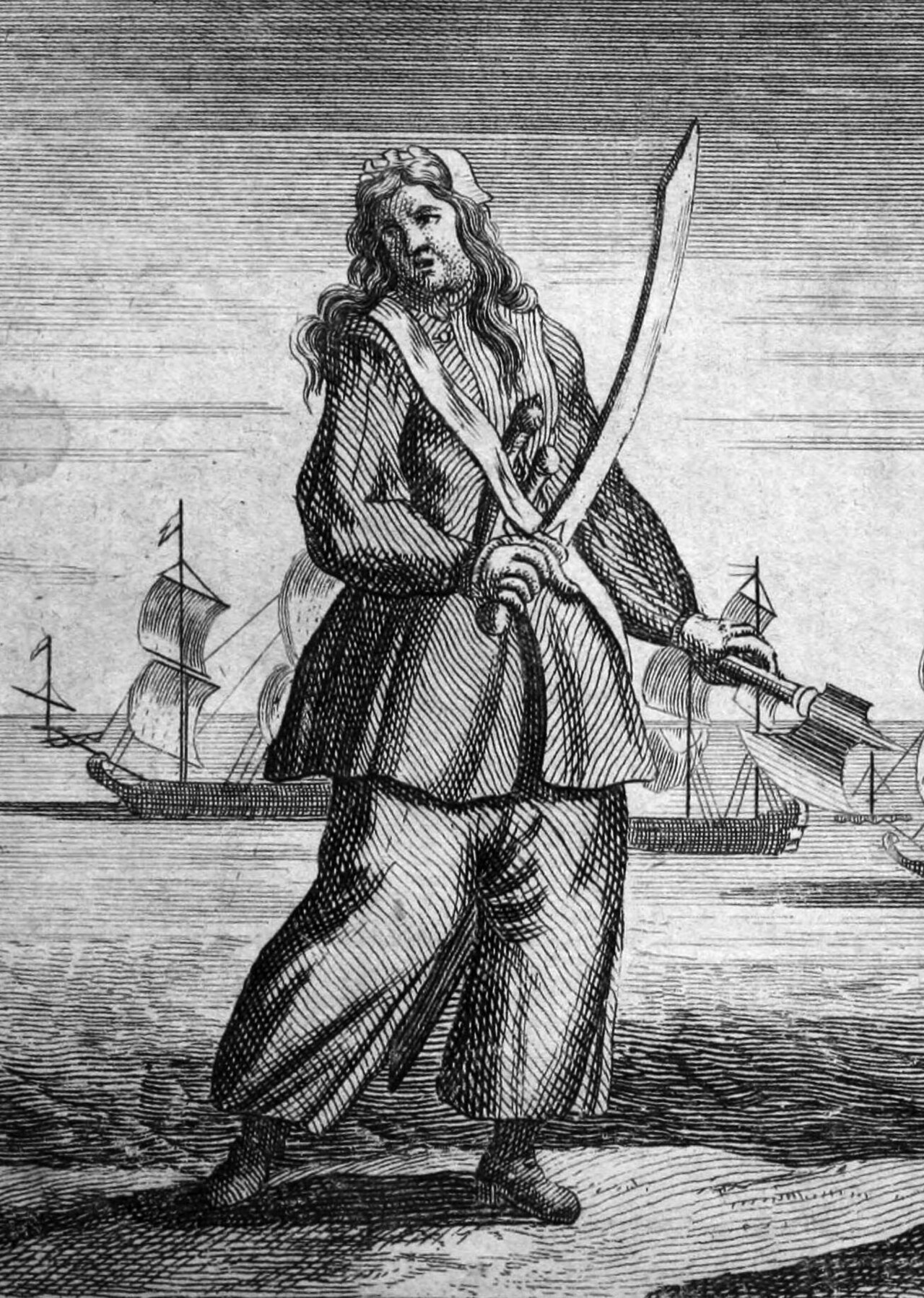
Anne Bonny's early life is largely unknown. No primary source, including her own trial transcript, mentions her age or nation of origin. The first biography, by Captain Charles Johnson, claims she was born in Ireland, the illegitimate daughter of an attorney and his servant, and later moved to Carolina where she married a sailor. However, there is little evidence to support this story, and no Anne Bonny from that period has been found in Irish baptism records. It is possible she was not of Irish origin, and she is not noted as a colonist of Nassau before 1713. At an unknown date, Bonny traveled to the Bahamas and became acquainted with John Rackham. On 22 August 1720, Bonny, Rackham, Mary Read, and about 13 other male pirates stole the sloop *William* from John Ham in Nassau harbor. The crew spent two months in the West Indies attacking merchant ships. On 5 September 1720, Governor Rogers issued a proclamation demanding the arrest of Rackham and his associates, naming both Anne Bonny and Mary Read. During their trial, victim Dorothy Thomas described Bonny and Read as wearing "men's jackets, and long trousers, and handkerchiefs tied about their heads" and that "each of them had a machete and pistol in their hands and they cursed and swore at the men to murder her."
On 22 October 1720, Rackham's crew was captured near Negril Point by former privateer Jonathan Barnet. Rackham was tried on 16 November and executed on 18 November. Bonny and Read were tried on 28 November in Spanish Town, found guilty, and sentenced to hang. Both "pleaded their bellies," claiming pregnancy, which stayed their executions. Read died in jail around mid-April 1721. Bonny's fate after the trial is unknown; she was likely let go at an unknown point, living until 1733.
Reader's Guide
Anne Bonny's significance lies in her status as one of the very few recorded female pirates during the Golden Age of Piracy, making her a lasting figure in pirate lore. Despite the scarcity of reliable historical evidence, her story—largely shaped by Captain Charles Johnson's unreliable biography—has captured popular imagination. The lack of primary sources means much of her early life remains speculative, including her nationality and background. Her partnership with Mary Read and their shared piracy under John Rackham has become legendary, though details such as the claimed romantic entanglement between them are unsupported. Bonny's legacy endures as a symbol of women in piracy, even as historians caution that many popular narratives are fictionalized.
Did You Know?
- Anne Bonny's trial transcript does not mention her age or nation of origin.
- No Anne Bonny born in the late 17th or early 18th century has been found in Irish baptism records.
- Governor Rogers' 5 September 1720 proclamation named both Anne Bonny and Mary Read as wanted associates of John Rackham.
- During their trial, victim Dorothy Thomas testified that Bonny and Read wore men's jackets and trousers, carried machetes and pistols, and cursed at men to murder her.
- Bonny and Read both avoided execution by claiming to be pregnant; Read died in jail around mid-April 1721.
The Enigma of Her Origins
Almost everything known about Anne Bonny's childhood rests on a single, deeply unreliable source: Captain Charles Johnson's 1724 compilation, A General History of the Pyrates. No baptismal record, trial transcript, or other primary document confirms her birth date, her place of origin, or even her age. Searches through Irish parish registers have turned up no Anne Bonny born in the late seventeenth or early eighteenth century, leaving open the possibility that she was never Irish at all. Johnson's narrative paints a melodramatic picture: an attorney's illicit affair with his servant Mary, a scandal exposed through a bizarre mix-up involving three stolen silver spoons, and a daughter born in prison. Later retellings, beginning with a 1964 romance novel, attached invented names to the unnamed characters, and those fabrications have been repeated as fact by respected historians. Johnson also claimed the attorney raised the infant as a boy before the ruse collapsed, that the family fled to Carolina, and that Bonny married a poor sailor against her father's wishes. Yet no documented case of a Carolinas attorney turning plantation owner with a daughter named Anne exists, and the entire account remains uncorroborated.
Two Women on Rackham's Deck
By the summer of 1720, Anne Bonny had made her way to the Bahamas, where she crossed paths with the pirate John Rackham. The precise circumstances of their meeting remain unrecorded, but by August she had joined his crew alongside another woman, Mary Read. Their first documented act together was the seizure of the sloop William, owned by a man named John Ham, taken from Nassau on 22 August 1720. From that point, Rackham and his crew carried out a series of raids on merchant vessels throughout the West Indies. Bonny and Read were not mere passengers; they were active members of the crew during these attacks. Their career at sea was brief but intense, lasting roughly two months before the crew's luck ran out. They were among the very few women whose presence aboard a pirate vessel during the Golden Age has left any trace in the historical record, making their short stretch of piracy an extraordinary footnote in an era dominated overwhelmingly by men.
The Gunfire, the Trial, and a Stayed Sentence
On 22 October 1720, near the coast of Jamaica, Rackham's vessel came under fire from Jonathan Barnet, a former privateer. The naval engagement was brief, and its outcome was decisive: Barnet's forces captured Rackham and his entire crew. In the aftermath, every male member of the crew was brought to trial, found guilty, sentenced to death, and executed. Bonny and Read, however, were granted a reprieve. Both women claimed they were pregnant, and the courts accepted their assertions, staying the sentences that would have ended their lives. The two fates diverged sharply after that point. Mary Read died in jail around mid-April 1721, her story ending in a cell. Bonny, by contrast, was released at some unknown date and lived on for roughly another twelve years, likely dying in December 1733. The pregnancy claims that saved her remain unverified, and the circumstances of her eventual release are lost to history. What is certain is that she outlived her crew, her companion, and the brief window of piracy that defined her name.
A Legend Built on a Single Unreliable Text
Anne Bonny has become one of the most widely recognized figures in the entire history of piracy, a status that is almost entirely the product of one book. Captain Charles Johnson's A General History of the Pyrates, published in 1724, is widely regarded as a highly unreliable collection of pirate biographies, yet it is the sole source for nearly every biographical detail associated with Bonny. The problem compounds over time: names that Johnson left blank were filled in by a 1964 novelist, and those invented names have since been quoted as historical fact by scholars including David Cordingly. The theatrical silver-spoon scandal, the attorney's plantation, the sailor husband James Bonny—none of it is corroborated by any independent record. No trial transcript mentions her age or nationality. No baptismal entry confirms an Irish birth. And yet, three centuries later, Bonny endures as an iconic symbol of the Golden Age, her legend inseparable from the very text that is its only foundation.
Common Misconceptions (Editorial)
One common misconception is that Anne Bonny was definitively Irish. While a popular early biography claims she was born in Ireland to an attorney and his servant, no primary source confirms her nationality, and no Anne Bonny from that period appears in Irish baptism records. Another misconception is that she was executed; in fact, she avoided execution by claiming pregnancy, and her ultimate fate remains unknown, though she likely lived until 1733.
Why It Matters (Editorial)
Anne Bonny endures as a symbol of defiance against gendered expectations, standing out in the male-dominated annals of piracy. Her story—shrouded in myth and sparse fact—reflects how historical figures can be shaped by unreliable sources and cultural fascination, reminding us to question even the most colorful tales from the past.
Gallery



Frequently Asked Questions
Who is Anne Bonny?
Anne Bonny was a female pirate active during the Golden Age of Piracy, best known for sailing under Captain John Rackham. She stands out as one of the very few women whose piracy is recorded in historical accounts and has since become one of the most widely recognized figures in the broader history of piracy.
What is known about Anne Bonny's background?
Very little is confirmed about her early life, family, or how she came to the sea. The earliest written account of her story appears in Captain Charles Johnson's 1724 compilation, a source that historians regard as highly unreliable.
Who did Anne Bonny serve under?
She is documented as a member of the crew commanded by John Rackham, a privateer operating in the Caribbean during the early 1720s. No other captain is reliably linked to her in the surviving records.
How does Anne Bonny's story end?
No primary source records the date, location, or circumstances of her death, so the end of her life remains completely unknown. She simply disappears from the historical record after the events of Rackham's capture.
Why is Anne Bonny important to pirate history?
Because women who actively participated in piracy are exceedingly rare in the surviving documentation, her case is a focal point for understanding gender and seafaring in the era. Her name has endured as a shorthand symbol of female defiance on the high seas, far outpacing most of her male contemporaries in popular memory.
More in Pirates 1-21
Spotted an error? Know more?
This is a living reference — every entry is fact-audited, and reader corrections feed straight into our audit queue. Suggest an edit · See this site's audit record