
Henry Every
English pirate who escaped with the greatest loot in history.

via Wikipedia: Henry Every · see source
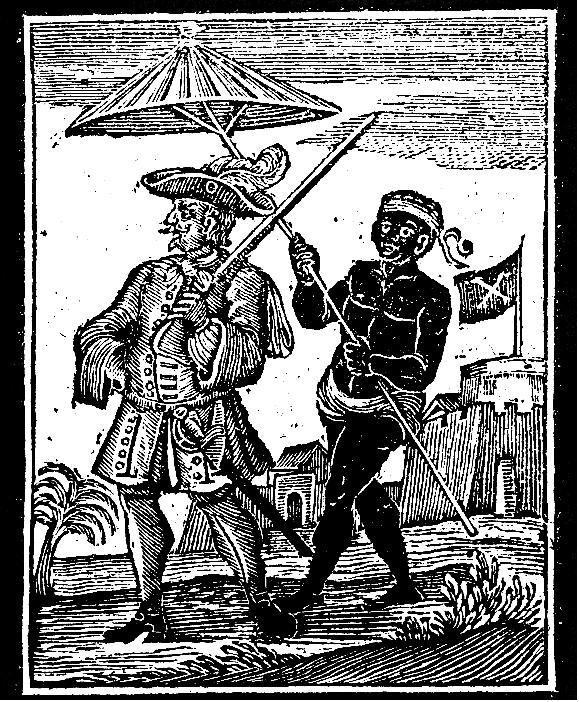
Henry Every (also known as Henry Avery; born 20 August 1659; disappeared June 1696), sometimes erroneously given as Jack Avery or John Avery, was an English pirate who operated in the Atlantic and Indian oceans in the mid-1690s. He probably used several aliases including Benjamin Bridgeman, and was known as Long Ben to his crewmen and associates. Dubbed the Arch Pirate and the King of Pirates by contemporaries, Every was infamous for being one of the very few major pirate captains to escape with his loot without being arrested or killed in battle, and for being the perpetrator of what has been called the most profitable act of piracy in history. Although his career as a pirate lasted only two years, his exploits captured the public's imagination, inspired others to take up piracy, and spawned works of literature.
- born
- 20 August 1659
- died
- Sometime between 1699 and 1714; exact date and location unknown
- nationality
- English
- known_for
- Capturing the Mughal treasure ship Ganj-i-Sawai; escaping with his loot; subject
Lore & Background
Henry Every began his pirate career as first mate aboard the warship Charles II. While anchored in the northern Spanish harbour of Corunna, the crew grew discontented as Spain failed to deliver a letter of marque and Charles II's owners failed to pay their wages, so they mutinied. Charles II was renamed the Fancy and the crew elected Every its captain. His most famous raid occurred on 7 September 1695, when he commanded a small pirate squadron that captured the Mughal vessels Ganj-i-Sawai and Fateh Muhammed, taking up to £600,000 in precious metals and jewels (equivalent to around £107.6 million in 2025). This caused considerable damage to England's fragile relations with the Mughals. A combined bounty of £1,000—an immense sum at the time—was offered by the Privy Council and the East India Company for his capture, considered the first worldwide manhunt in recorded history. Although a number of his crew were subsequently arrested, Every himself eluded capture, vanishing from all records in 1696; his whereabouts and activities after this period are unknown. Unconfirmed accounts state he may have changed his name and retired, quietly living out the rest of his life in either Britain or on an unidentified tropical island, while alternative accounts consider Every may have squandered his riches. He is considered to have died sometime between 1699 and 1714; his treasure has never been recovered.
Reader's Guide
Henry Every's significance lies in his unprecedented success as a pirate and his lasting cultural impact. His capture of the Ganj-i-Sawai was the most profitable single act of piracy in history, and his escape without capture or death in battle made him a legendary figure. The manhunt for him, the first worldwide manhunt, highlighted the threat piracy posed to international trade and diplomacy. Every's exploits inspired others to take up piracy and spawned works of literature, including Daniel Defoe's The King of Pirates (1720). Despite his short two-year career, he became a symbol of the romanticized pirate archetype. His ultimate fate remains unknown, adding to his mystique. The historical record is complicated by fictionalized accounts, such as the 1709 memoir The Life and Adventures of Capt. John Avery, which mixed fact with invention. Modern scholarship has clarified his real name and early life, but many details of his later years remain uncertain. Every wed Dorothy Arther at St James Duke's Place in London on 11 September 1690; there is no evidence he had any children. He served as a midshipman aboard HMS Rupert under Sir Francis Wheeler, and later as a Master's mate, before being discharged from the Royal Navy on 29 August 1690. After his discharge, he became involved in the Atlantic slave trade, contracted by the governor of Bermuda, Isaac Richier, to transport African slaves from West Africa to the Americas.
Did You Know?
- Every used the alias Benjamin Bridgeman only after committing piracy; his real name was Henry Every, which he used when entering the Royal Navy.
- He was known as 'Long Ben' to his crewmen and associates.
- The combined bounty of £1,000 for his capture is considered the first worldwide manhunt in recorded history.
- Every married Dorothy Arther at St James Duke's Place in London on 11 September 1690; there is no evidence he had any children.
- After his discharge from the Royal Navy in 1691, Every worked as a slave trader along the Guinea coast, contracted by the governor of Bermuda.
From Mutiny to Captaincy
Henry Every's path to piracy began not with a bold declaration but with a crew's collective frustration. In the mid-1690s, he served as first mate aboard the warship Charles II, anchored in the northern Spanish port of Corunna. Two grievances festered among the men: Spain had failed to deliver the promised letter of marque, and the ship's owners had stopped paying wages. The resulting mutiny transformed the vessel into a pirate ship, renamed the Fancy, and the crew voted Every into the captain's chair. This was no spontaneous act of lawlessness but a calculated response to broken promises and unpaid labor. Every, who had already accumulated years of experience as a midshipman and Master's mate in the Royal Navy during the Nine Years' War, brought practical seamanship and tactical knowledge to the role. His naval service aboard HMS Rupert and HMS Albemarle, including participation in the capture of a French convoy off Brest, had given him a solid foundation in combat operations. The transition from disciplined naval officer to elected pirate captain was, in many ways, a natural extension of his maritime career rather than a radical departure from it.
The Raid on the Mughal Convoy
On 7 September 1695, Every orchestrated what many historians regard as the single most lucrative act of piracy ever committed. Targeting a 25-ship convoy of Grand Mughal vessels on their annual pilgrimage to Mecca, he joined forces with several other pirate vessels to command a small squadron. The prize of particular value was the Ghanjah dhow Ganj-i-Sawai, laden with treasure, and its escort vessel Fateh Muhammed. The combined haul of precious metals and jewels was estimated at up to £600,000—a figure that translates to roughly £107.6 million in 2025 currency. The raid's consequences extended far beyond the immediate financial gain. England's already fragile diplomatic relationship with the Mughal Empire suffered considerable damage, and the Privy Council and the East India Company jointly placed a bounty of £1,000 on Every's head. That sum was staggering for the era, and the coordinated effort to track him down across multiple oceans is widely considered the first worldwide manhunt in recorded history.
The Vanishing and the Unrecovered Fortune
Despite the extraordinary scale of the reward and the intensity of the pursuit, Henry Every slipped through the net. While numerous members of his crew were eventually arrested and some, like William Phillips, gave detailed depositions about his appearance and background, Every himself vanished from every official record by June 1696. No court document, naval log, or merchant ledger after that date places him in any identifiable location. Unconfirmed accounts suggest he may have assumed a new identity and retired to a quiet life, either somewhere in Britain or on an unnamed tropical island. Other theories propose he simply squandered his accumulated wealth. Historians generally place his death somewhere between 1699 and 1714, but no body, no grave, and no definitive record confirm the circumstances. His treasure, worth hundreds of thousands of pounds in the late seventeenth century, has never been located or recovered. The combination of his complete disappearance and the unrecovered fortune has cemented Every's legend as much as his exploits did, leaving future generations to speculate endlessly about where the King of Pirates ultimately ended up.
Identity, Myth, and Enduring Legacy
The very name Henry Every has become a site of historical debate. Contemporaries knew him as the Arch Pirate and the King of Pirates, while his crew called him Long Ben. Early biographical works, including a 1709 memoir attributed to a Dutch author writing under the pseudonym Adrian van Broeck, introduced errors that persisted for centuries—placing his birth in 1653 in Cattedown, Plymouth, and describing his father as a trading captain who served under Admiral Robert Blake. Modern scholarship has corrected these details, establishing his actual birth in 1659 in Newton Ferrers, Devon, and confirming that Henry Every was his genuine name, used when he entered the Royal Navy well before any piratical activity. The alias Benjamin Bridgeman, which fueled theories that it was his true name, was adopted only after he began committing piracy. His brief two-year career nonetheless spawned literary works, most notably Daniel Defoe's 1720 The King of Pirates, and inspired a generation of would-be pirates. The Dictionary of National Biography dismissed the earliest account as fiction with scarcely a substratum of fact, yet the legend endures, built as much on myth as on documented record.
Common Misconceptions (Editorial)
Some believe Henry Every went by the alias "Jack Avery" or "John Avery," but the facts confirm his real name was Henry Every (also known as Henry Avery), and the names Jack or John are erroneous. Others assume he used the alias Benjamin Bridgeman before turning to piracy, but he actually used that name only after committing piracy, having entered the Royal Navy under his real name. It is also commonly thought that Every was caught or died in battle like many pirates, but he was one of the very few major pirate captains to escape with his loot without being arrested or killed in action.
Why It Matters (Editorial)
Henry Every endures in history not just as a notorious pirate, but as a symbol of the elusive outlaw who outran the world’s first global manhunt. His spectacular heist of the Mughal treasure ship and his mysterious disappearance continue to captivate the imagination, representing both the romantic allure and the harsh geopolitical consequences of piracy in the age of sail.
Gallery
Frequently Asked Questions
Who is Henry Every?
Henry Every (sometimes spelled Avery) was an English seafarer born in 1659 in Devon who turned to piracy in the mid-1690s, operating across the Atlantic and Indian Oceans. He was so feared that his contemporaries gave him titles like "Arch Pirate" and "King of Pirates."
What is Henry Every most famous for?
He is best known for seizing the Mughal treasure vessel Ganj-i-Sawai, an act widely regarded as the single most lucrative piracy in recorded history. He is also notable for being one of the very few major pirate captains to walk away with his plunder intact, never captured or killed in combat.
How did Henry Every's story end?
After disappearing from public records in June 1696, his exact fate was never confirmed; historians place his death somewhere between 1699 and 1714. No one has ever been able to verify where or how he died, making his final years one of piracy's enduring mysteries.
Why is Henry Every considered so important in pirate history?
His successful escape with enormous wealth made him the subject of the first truly global manhunt in history. He proved that a pirate captain could vanish with a fortune and never face justice, a feat almost no other major pirate in that era managed.
What was the Ganj-i-Sawai?
It was a Mughal treasure ship that Every and his crew captured in the mid-1690s, and its cargo represented what is considered the most profitable single act of piracy ever recorded. The haul was so vast that it triggered an international pursuit spanning multiple oceans.
More in Pirates 1-21
Spotted an error? Know more?
This is a living reference — every entry is fact-audited, and reader corrections feed straight into our audit queue. Suggest an edit · See this site's audit record